
ChatGPT vs Claude vs Gemini vs Grok: Which AI Is Best for Content Creators?
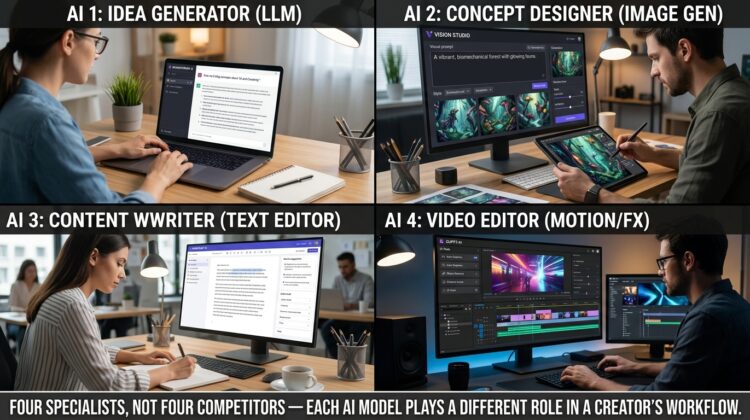
I used to think switching between AI tools mid-project was a sign I hadn’t found “the one” yet. Then I actually tracked how much time I was losing fighting one chatbot to do a job it wasn’t built for — asking it to analyze a video file it couldn’t watch, or waiting for it to catch a trending topic it had no live access to — and the lightbulb finally went off. The best creators aren’t loyal to a single AI. They’re running a small toolkit, matching each model to the job it’s actually good at.
This guide is my honest breakdown of Claude, ChatGPT, Gemini, and Grok specifically for content creation work — scripting, blogging, social strategy, and everything multimodal — so you can stop guessing and start building a stack that actually fits how you work.
The Real Reason “Pick One AI” Doesn’t Work
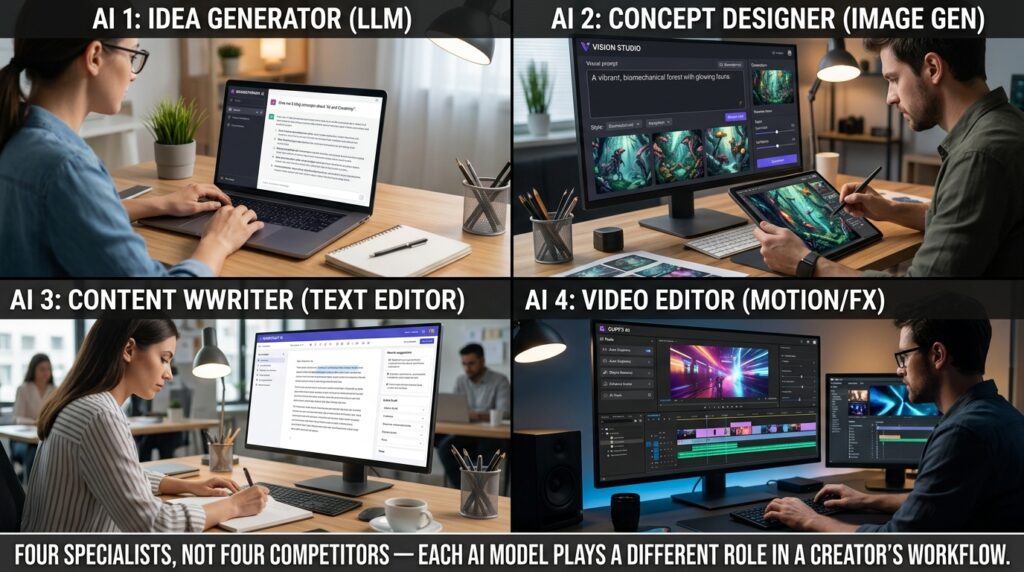
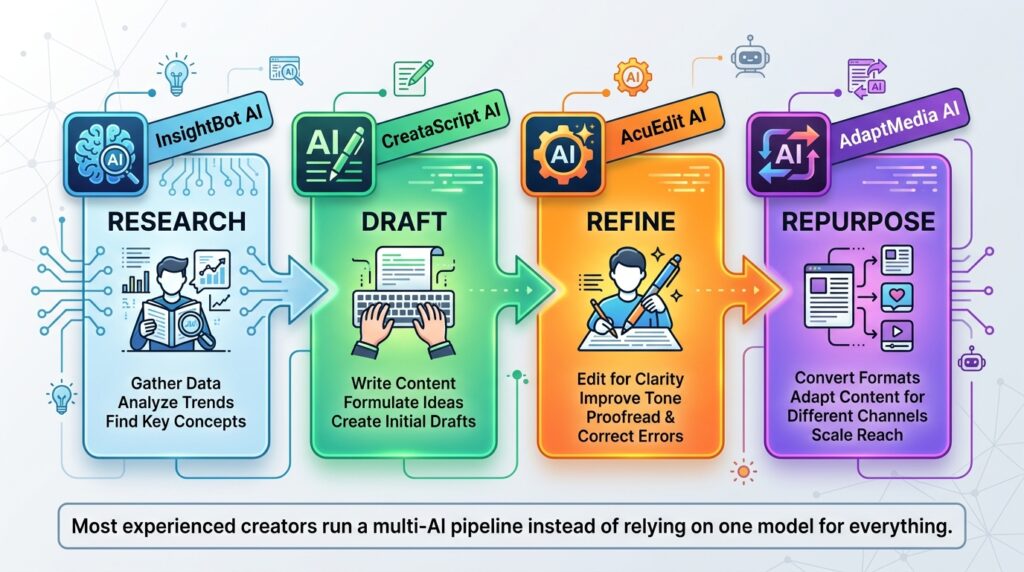
Across creator communities on Reddit — r/WritingWithAI, r/OpenAI, r/YouTube — the same insight keeps surfacing: relying on a single model is basically a myth among people who create content professionally. A common pipeline looks like this — use Gemini or Grok for initial trend research, draft the core script in Claude, then finalize titles, thumbnails, and social copy in ChatGPT. Each tool does one job well instead of all jobs adequately.
Once I stopped trying to force one AI to do everything, my actual output quality went up. So let’s go model by model.
Claude: The One I Trust for Actual Writing
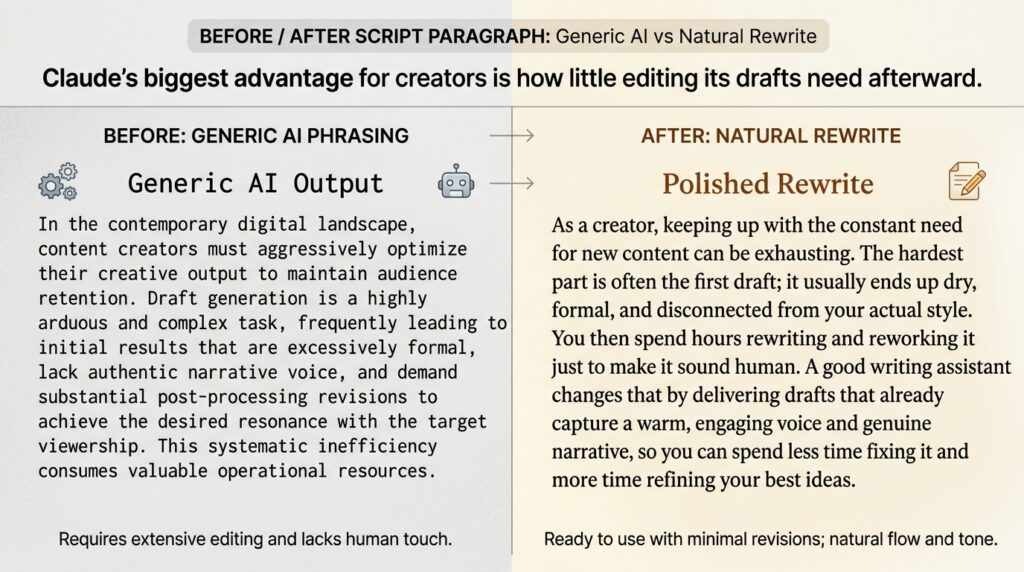
If your job depends on prose that doesn’t sound like an AI wrote it, Claude is where I start every time — scripts, blog drafts, essays, anything long-form.
What sold me isn’t a single flashy feature; it’s consistency. Claude handles character pacing, natural pauses, and humor in scripts noticeably better than the alternatives, and it preserves a consistent brand voice across scripts running 3,000+ words. I’ve also noticed it actually respects negative instructions — tell it not to add a summary or conclusion, and it won’t sneak one back in on you, which is a small thing that saves real editing time.
For blog work, Claude has become something of a community favorite for long-form SEO drafts specifically because it skips the clichéd openers that plague so much AI content writing — the “In today’s fast-paced digital landscape” type of filler that other tools default to. It also holds a massive context window, up to 1 million tokens, which matters if you’re managing an ebook or a multi-episode series where the AI needs to remember plot points or a character bible across sessions without drifting off track.
For social content, Claude’s strength shows up in longer-form posts — LinkedIn thought leadership, Substack notes — where depth and an authentic personal tone matter more than a punchy one-liner.
Where it falls short: image generation. Claude focuses on vision analysis — reading charts, screenshots, and layouts with precision — rather than creating visuals, so you’ll want a dedicated AI image generator or thumbnail maker alongside it.
ChatGPT: The All-Rounder for Structure and Volume
ChatGPT earns its spot in my stack for a completely different reason — it’s the tool I use to plan and multiply, not to write final drafts.
Its Canvas interface is genuinely handy for scripts: highlight one paragraph, ask for a targeted change like “make this punchier” or “add a B-roll cue here,” and it adjusts just that section instead of regenerating the whole document. For structural work — keyword mapping, H2/H3 outlines, schema markup — it’s efficient, though I always end up editing out repetitive bold-heavy lists and familiar transition phrases before publishing.
Where it really shines for me is batch content. One blog post or transcript in, and it can turn that into 20 tweet variations, five LinkedIn carousel outlines, and ten Instagram captions, formatted and ready to drop into whatever social media management tools you’re using. That single feature alone regularly saves me a half-day during heavy publishing weeks.
It also ships with built-in DALL-E image generation and Advanced Voice Mode — a lot of creators use the voice feature as a sounding board, talking through an idea out loud during a commute and turning it into structured notes afterward. If you’re a solo creator handling both strategy and execution, ChatGPT’s breadth makes it hard to beat as an all-around choice.
Gemini: The Underused Video and Research Specialist
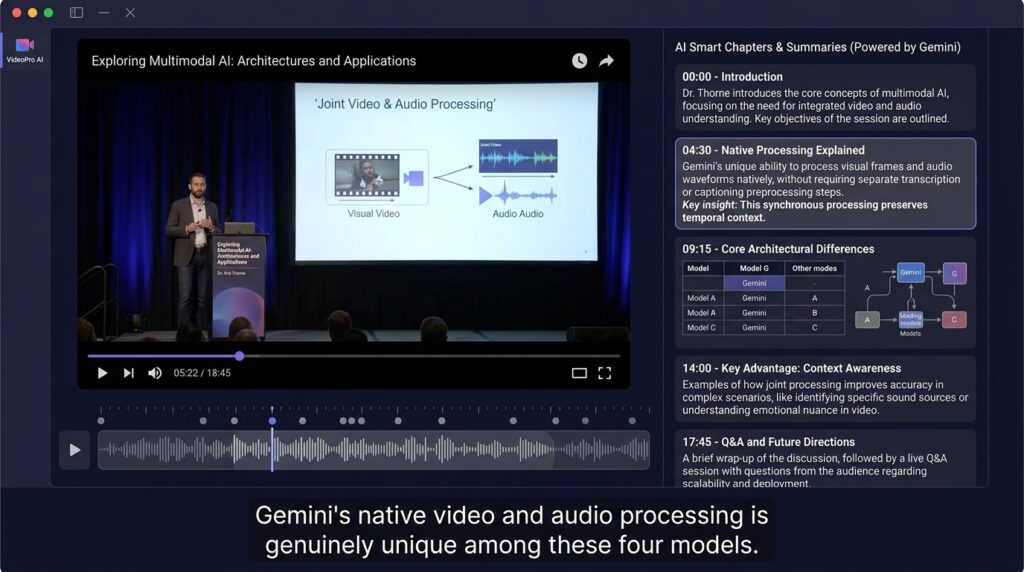
Gemini plays a role none of the other three can really touch: native multimodal understanding.
You can upload an actual video file or paste a YouTube URL, and Gemini will analyze pacing, extract timestamps, summarize talking points, or generate a companion script based on the real footage — not a text description of it. If you’ve ever wanted to understand why a competitor’s video is outperforming yours, this is the tool built for that exact job.
For blog and article writing, Gemini’s live search verification is worth using any time you’re citing a statistic, referencing a recent case study, or covering something time-sensitive. It’s less about creative polish and more about grounding your content in something checkable — which matters a lot if you’re a small business owner where credibility is on the line. It also integrates tightly with Google Workspace and YouTube, a real convenience if your workflow already lives in Docs and Drive.
Grok: Built for Speed, Not Depth
Grok is the specialist I bring in specifically when something is happening right now.
Because it pulls straight from the live X data stream, you can ask it to summarize current public sentiment on a topic and get platform-native post drafts back almost instantly — useful if you’re managing social media and need to react to a trend before it cools off. It’s also decent for short-form video hooks on TikTok, Reels, or Shorts that lean on humor or a hot take, though it noticeably loses the thread on anything approaching a real narrative past roughly 1,500 words.
Its image generation, powered by the Aurora/Flux engines, runs with fewer guardrails than the competition, which makes it popular for quick meme templates and rough concept art — just review outputs carefully before anything goes out under a brand name. If your work leans toward opinion editorials or fast commentary on industry news, Grok’s direct, punchy tone fits that better than the more measured voice you’d get from Claude or Gemini.
Quick Comparison: Who Wins What
Boiled down: Claude is the industry leader for writing naturalism and pure prose quality. ChatGPT wins on workflow tooling — Canvas, custom GPTs, and the broadest ecosystem. Gemini wins on real-time data through Google Search integration and is the only one with native video and audio processing. Grok wins on real-time social data through its direct X pipeline, something none of the others have access to.
On image generation specifically: ChatGPT (DALL-E), Gemini (Google Imagen), and Grok (Flux/Aurora) all generate natively, while Claude requires pairing with a third-party AI photo editor or image generator to cover that gap.
Building Your Own Stack
Running a YouTube channel? Make Claude your primary for scriptwriting and voiceover prose, bring in Gemini to analyze competitor videos and plan B-roll off real timestamps, and use ChatGPT as your helper for high-CTR titles, thumbnail concepts, and description tags.
Blogging or doing SEO work? Claude again leads for drafting balanced, natural-toned articles, ChatGPT handles keyword strategy and outline generation, and Gemini verifies statistics and recent industry news before anything goes live.
Managing social media or growth marketing? Flip the order — Grok becomes primary for tracking live trends and drafting timely posts, with ChatGPT as secondary for bulk caption formatting, scheduling prep, and quick image generation.
What the Editing Pass Still Needs to Catch
Regardless of which model drafts your content, none of these four should be your final step. I still run every script and article through a separate grammar and tone pass afterward, because that’s where the small inconsistencies in brand voice tend to hide — especially across a longer piece.
Final Thoughts
If there’s one thing worth taking away from this comparison, it’s to stop hunting for a single “best” AI writing tool and start thinking in terms of pipeline stages instead. Claude for the actual writing. ChatGPT for structure and batch output. Gemini when video or research grounding matters. Grok when speed and live relevance matter more than depth. None of these four are trying to be your only assistant — they’re each solving a different piece of the job, and the creators getting consistently better output are the ones who’ve accepted that and built their workflow around it.